arivāmeಅರಿವಾಮೆ
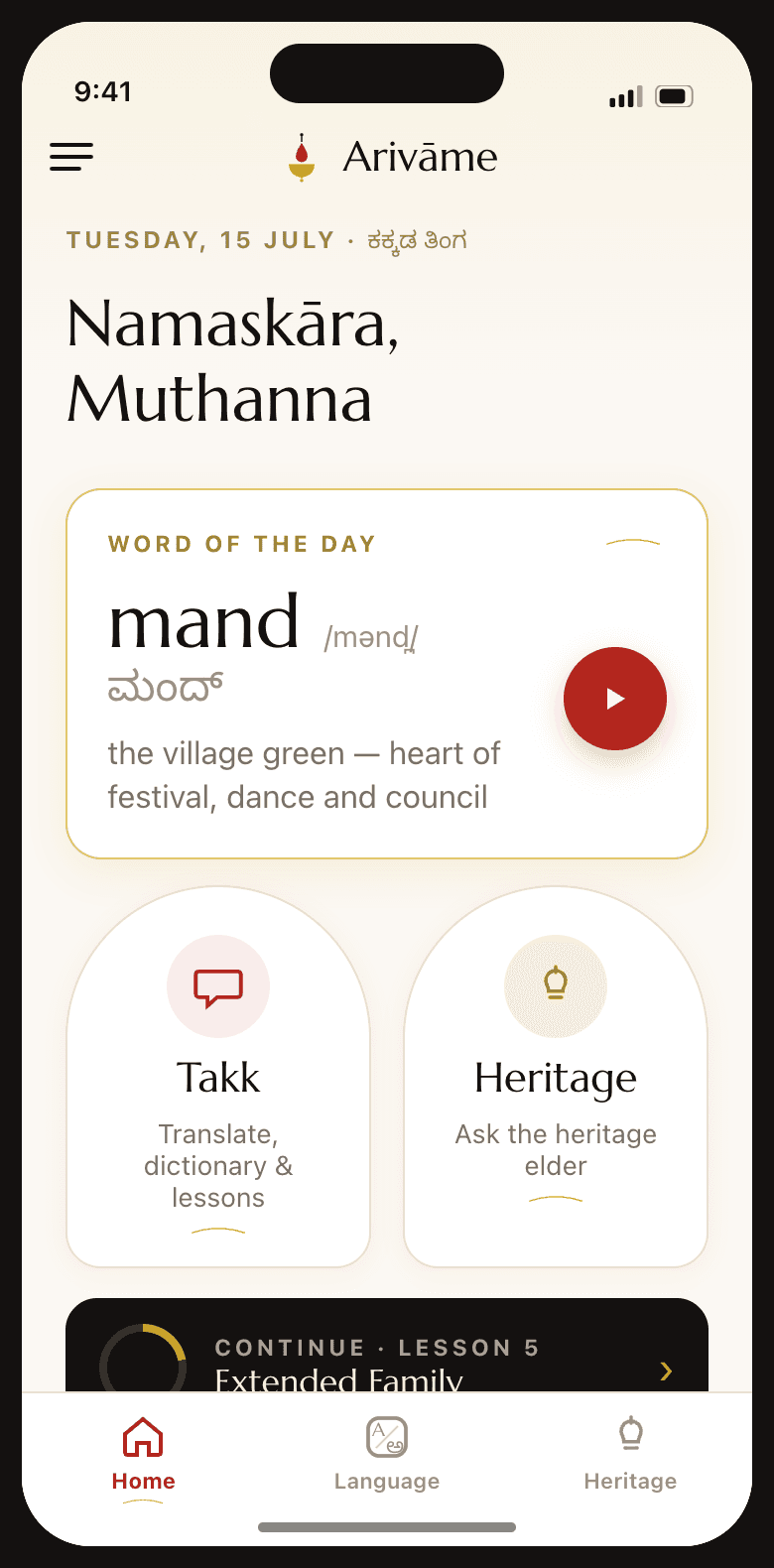
From ariv — knowledge. A lamp of knowledge: the language tools, the restored record of Kodagu, our songs, and the people making Kodava culture now, all carried in one app.

What's inside
Six things, one app.
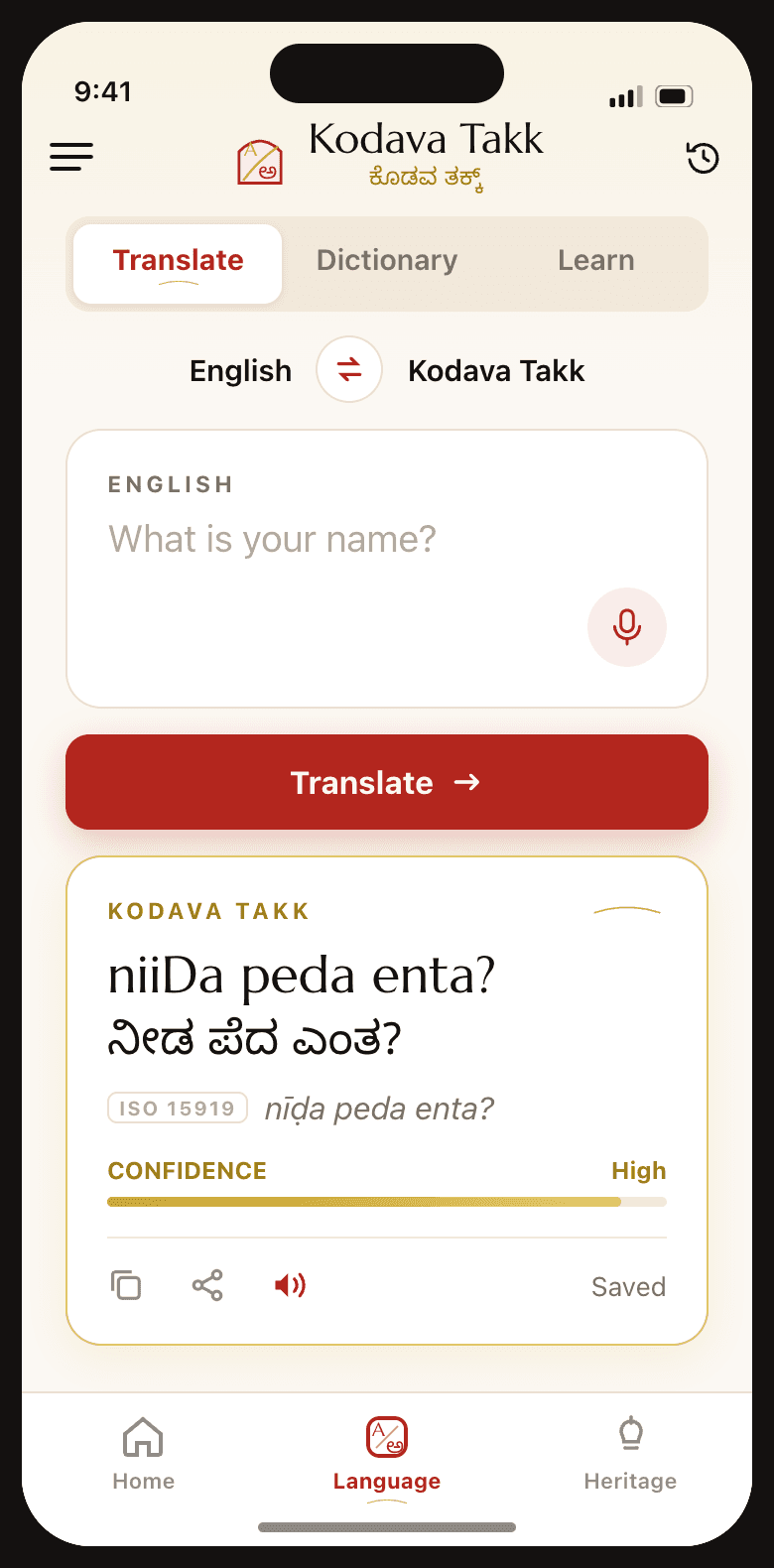
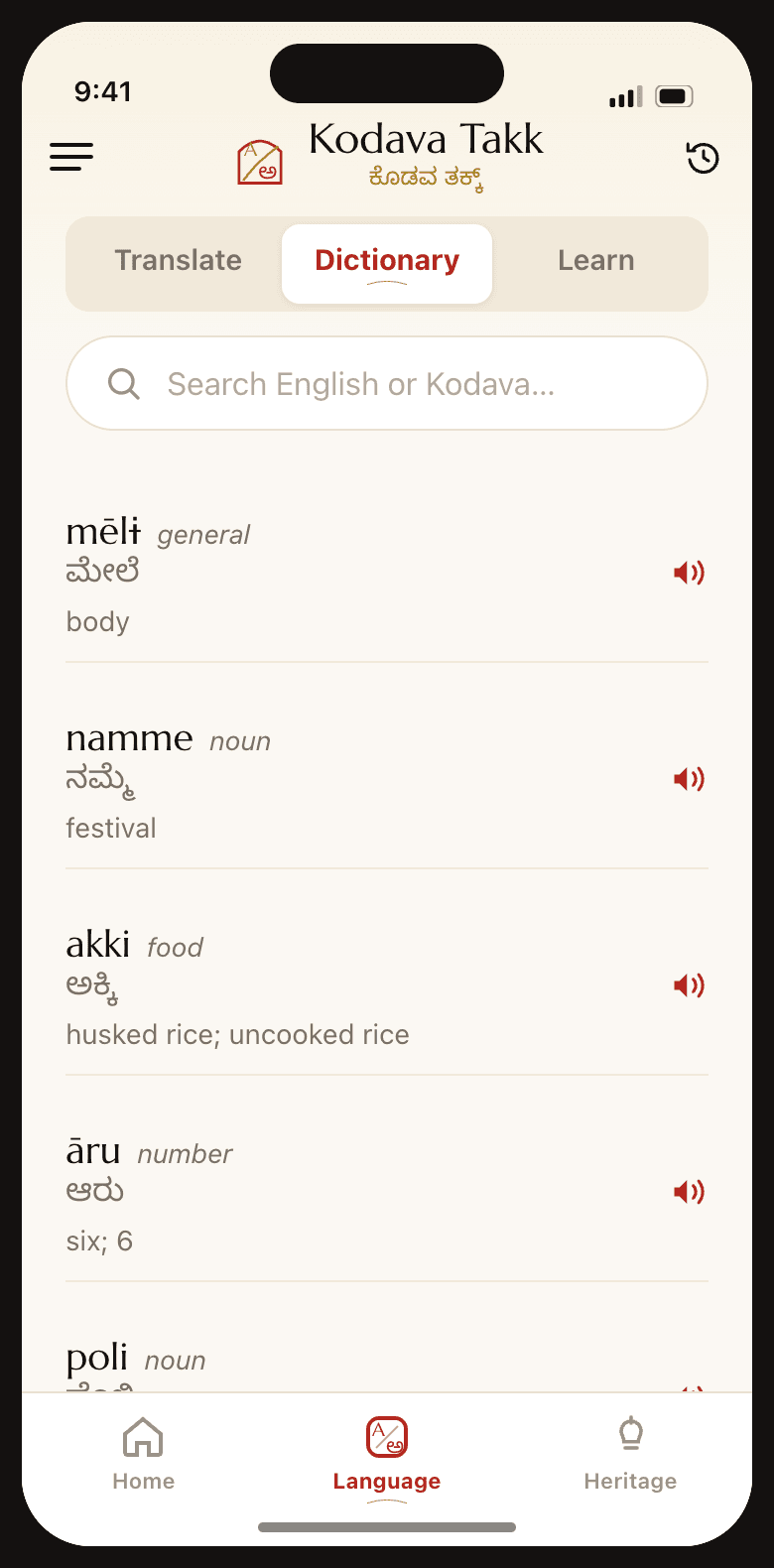
Takk
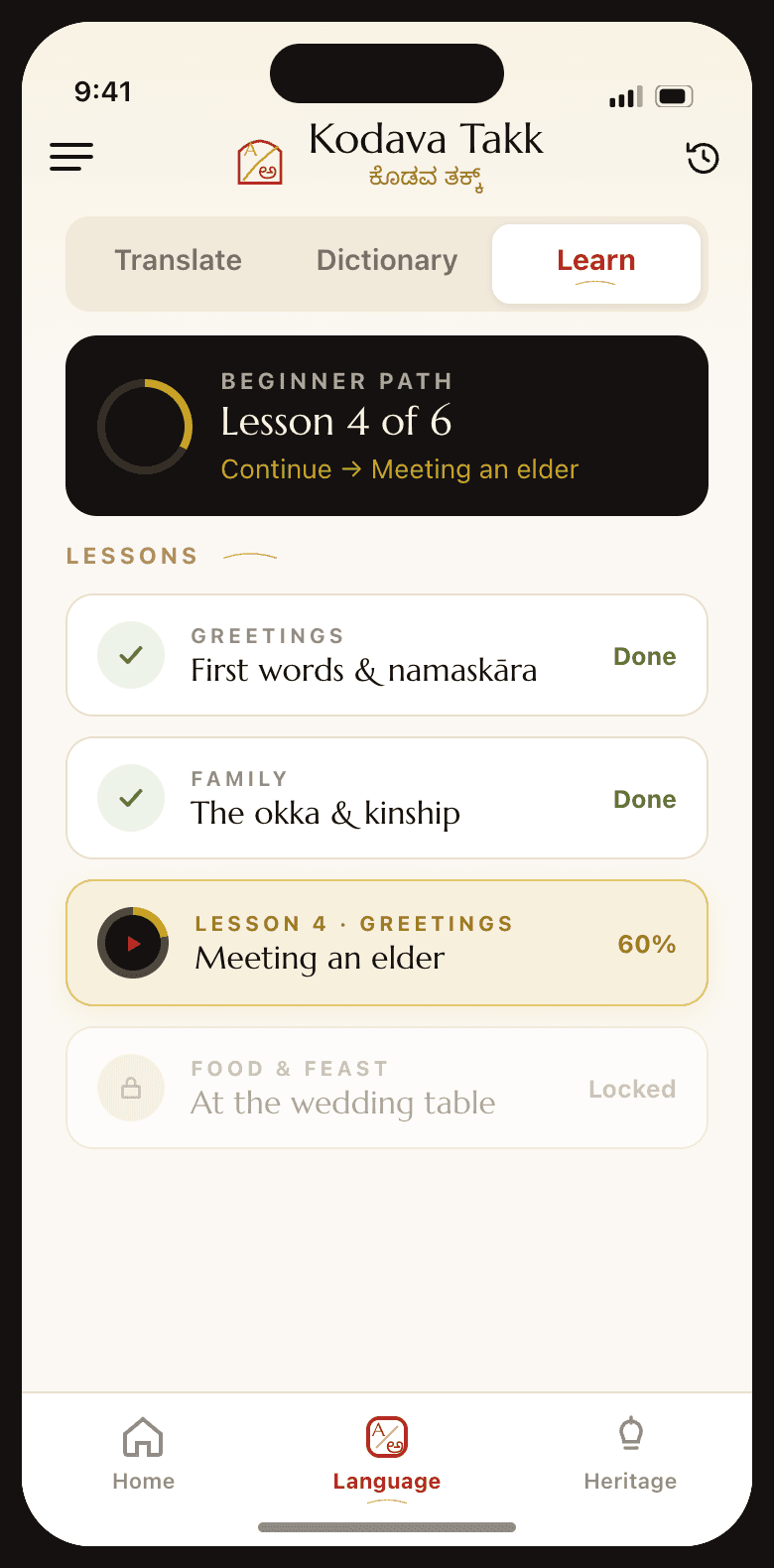
The translator, the 14,000-word dictionary and the lessons, on your phone. Look up a word mid-conversation, correct a translation you know is wrong, save the ones you keep forgetting.
The library
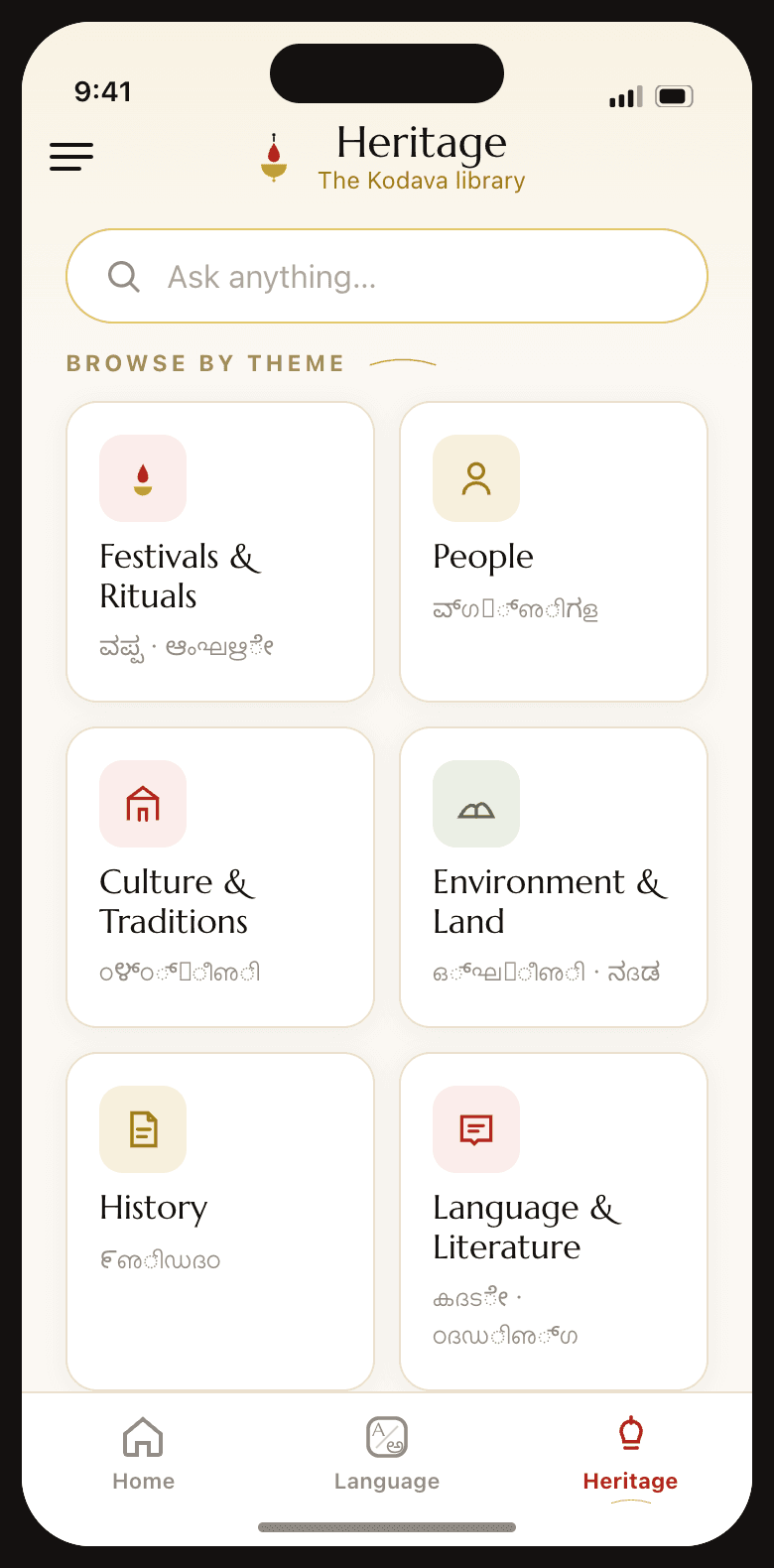
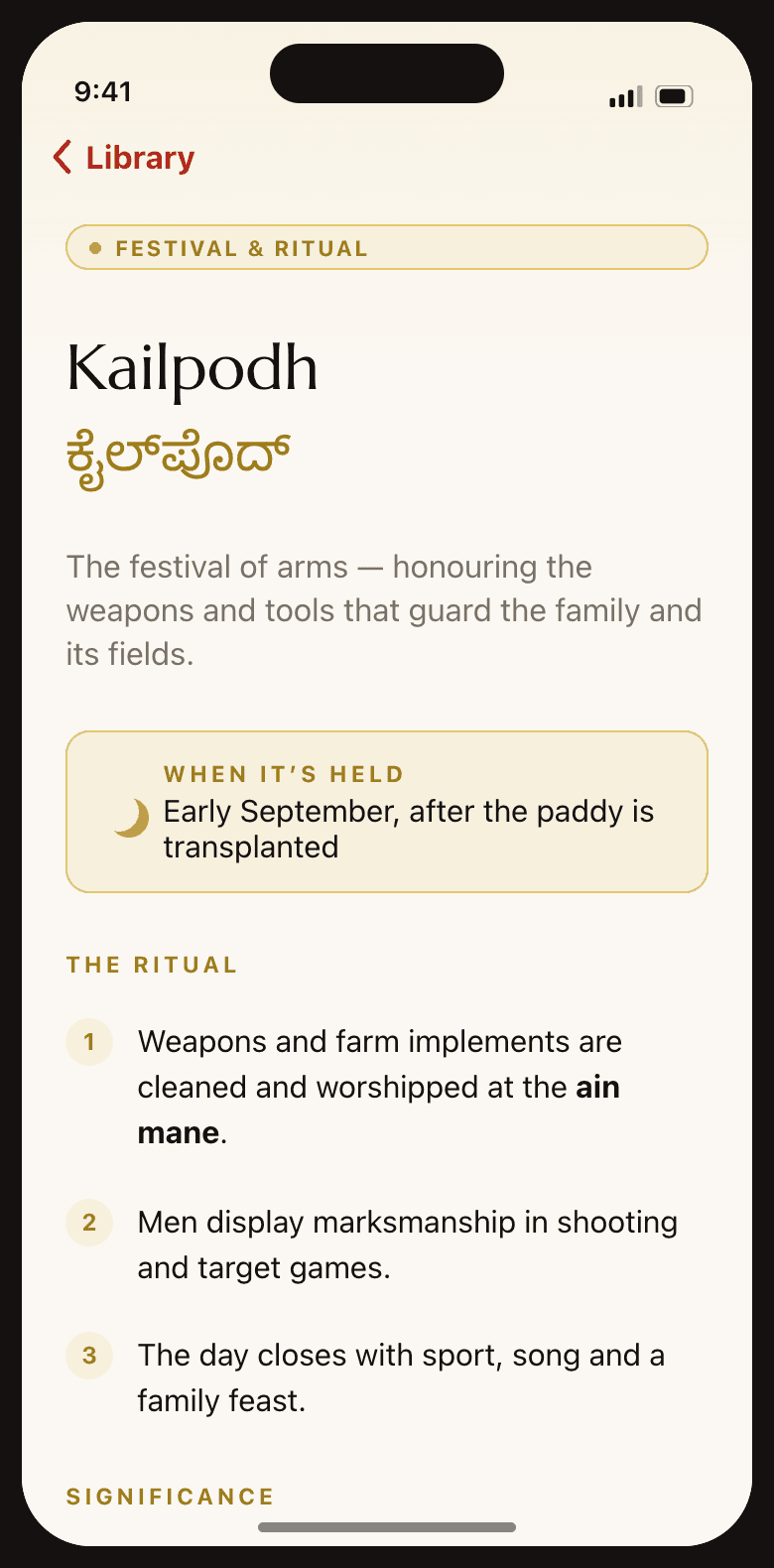
Gazetteers, grammars, census volumes, song collections — a growing library of what was written about Kodagu, restored out of damaged scans into text you can actually read, browse by theme, and quote with a page number.
Ask about heritage
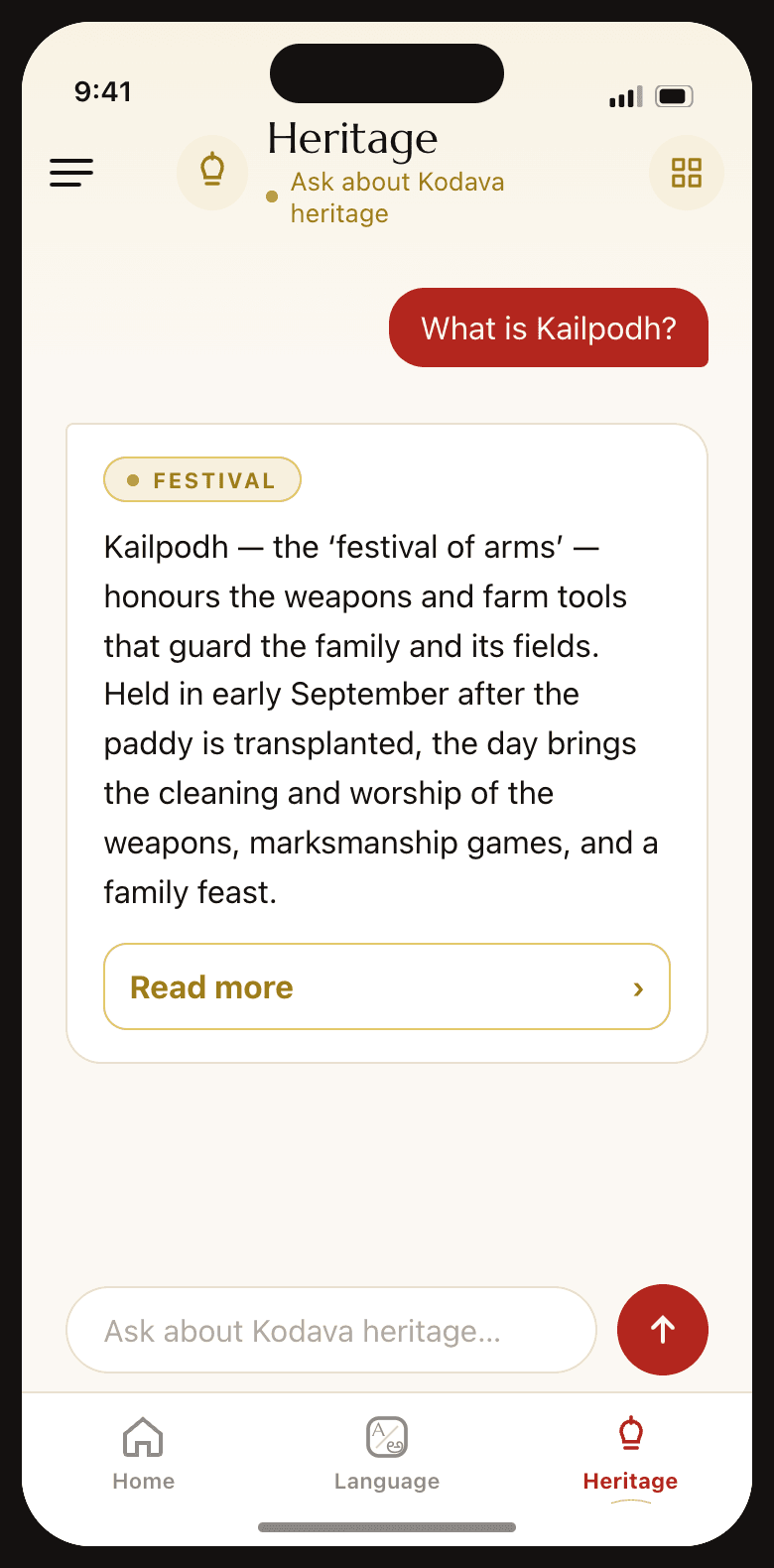
A chat that answers questions about Kodava customs, history and places from that library, and shows you which book and page it came from. No invented history: if the sources don't say it, neither does it.
The songs
Balo, Puthari, Mangala, Chavu — the folk songs collected in 1869, kept in their original verse and transliterated line by line wherever the verse allows, so a Kodava who doesn't read Kannada script can follow them.
Creators
Musicians, dancers, poets and film-makers with real profiles and a real audience. Ummathat, Bolakat, Valaga and everything being made now, in one place instead of scattered across feeds.
Yours to add to
Every word you submit, every correction you make and every recording you contribute goes into the shared record — and is credited to you.
The archive
The record of Kodagu, rescued from unreadable print.
Most of what was ever written about Kodagu survives only as scans of nineteenth- and twentieth-century print — broken columns, blotted type, tables collapsed into nonsense. Searchable in theory; unreadable in practice.
We read all of it back, page by page. Damage repaired, wording kept, and every reference cited to the source it came from, so nothing here is hearsay. Census tables came back with their figures intact. The 1869 song collection came back with its Kannada verse and its stanza breaks.
On top of that sit articles in plain modern language, each one citing the sources underneath it — the readable way in, for people who want the story before the footnotes. Both the library and the articles are still growing.
For now the library lives inside the app. Whether it also opens on the web is a decision we haven’t made yet.
What’s in it
Get it
Free, and yours.
No cost, no lock-in, nothing sold on. Arivāme exists so that a Kodava anywhere in the world can reach their own language and their own record without asking anyone’s permission.
Want to be told the day it lands? Write to us at info.kodavame@gmail.com, or read about how to help build it. Already have an account and want it gone? Delete it here. Found something broken, or something we got wrong? Tell us.