Why we started, and what we hold to.
This is an initiative by a small group of Kodavas building the things our language, our record and our community needed and nobody else was going to build. Five programmes now, two of them real and three still being argued about.
The story
It began with a need within our own homes: children who could follow Kodava takk but not answer in it, and nothing anywhere that could help. There was nothing to build on — no translator, no dictionary a computer could read, not even a word list in a form a machine could use. The big language collections that hundreds of other languages sit in, the ones every new tool gets built from, simply did not have Kodava takk in them.
That absence is what a language looks like shortly before it stops being written. Not dramatic — just missing from every list, so every new tool built on those lists is built without it, and the next generation grows up with a mother tongue that their devices cannot spell.
So we built the translator, then the dictionary, then the lessons. And then, following the same absence backwards, we found that the written record of Kodagu itself was in the same state — present, scanned, and effectively unreadable. So we read it back.
Everything since has come from the same instinct: find the thing that ought to exist for Kodavas and does not, and make it. That is how a translation project ended up with five programmes.
Because preservation on its own has a ceiling. A language nobody uses to talk about a job, a harvest or a family crisis becomes a museum piece, however well archived. The most useful thing we can build for an eighteen-year-old in Gonikoppal is not a dictionary — it is somebody in Bangalore who will take their call. For a grower in Virajpet it is knowing what a curer paid a neighbour last week. For a family that has just moved to Pune it is one person who answers.
So Connect, Market and Community sit under the same roof as the language and the archive. None of those three is built. We would rather publish the thinking and be held to it than announce them when they are safely finished.

“A language you cannot type, search, or teach a machine is a language that quietly stops being written down.”
Built by Kodava diaspora.
Principles
Six things we don’t compromise.
Sources, always
Every heritage claim we publish is cited to the source it came from. Culture is not a thing to improvise, and a confident machine answer with no source behind it is worse than silence.
Speakers decide
A model can guess. Only a native speaker can say whether that is how it is said. Community correction is not a feedback form bolted on the side — it is the mechanism.
Credit and link out
Where others have done the work first, we say so and send people there. We would rather be one useful part of the Kodava internet than pretend to be all of it.
Free at the point of use
The language and the record belong to the community. Nothing that preserves them sits behind a paywall.
Say what isn't built
Three of our five programmes are research and are labelled that way everywhere they appear. An unbuilt thing described in the present tense is a small lie that costs more than the attention it buys.
Open where openness helps
Market serves every grower in Kodagu and Connect takes students from any school in the district, because a price board or a mentoring cohort that gates on community would be worth less and mean less. The language and the heritage work are ours; the useful things are not only ours.
The people
Who’s behind it.
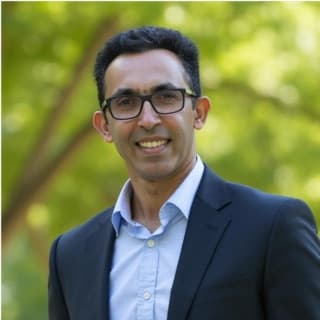
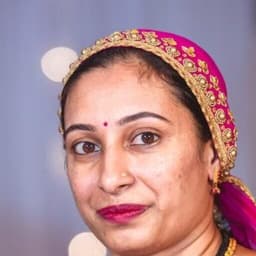
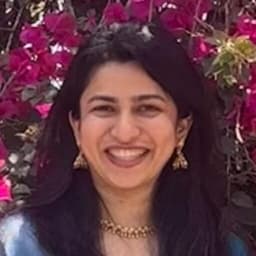
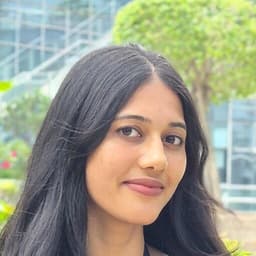
A founding pair, a content team of native speakers, and a growing list of contributors — every one of whom corrected something a machine got wrong. Connect and Community will need mentors and moderators before they need engineers.
Founders
Names and introductions go up shortly.
Content team
Contributors & ambassadors
Every correction submitted on the translator makes you one of us, and every koota, family group and community event where someone passes this on is how the diaspora finds it at all. Your name could be on this page.
Credit where due
Standing on other people’s work.
The heritage library rests on nineteenth- and twentieth-century scholars and administrators who wrote Kodagu down — and on the archives that digitised them. Where a source proved unreliable, we pulled it from the library rather than quietly citing it anyway.
If you hold Kodava material — recordings, manuscripts, photographs, family papers — and want it preserved properly, we would rather talk to you than go around you. Get in touch.